

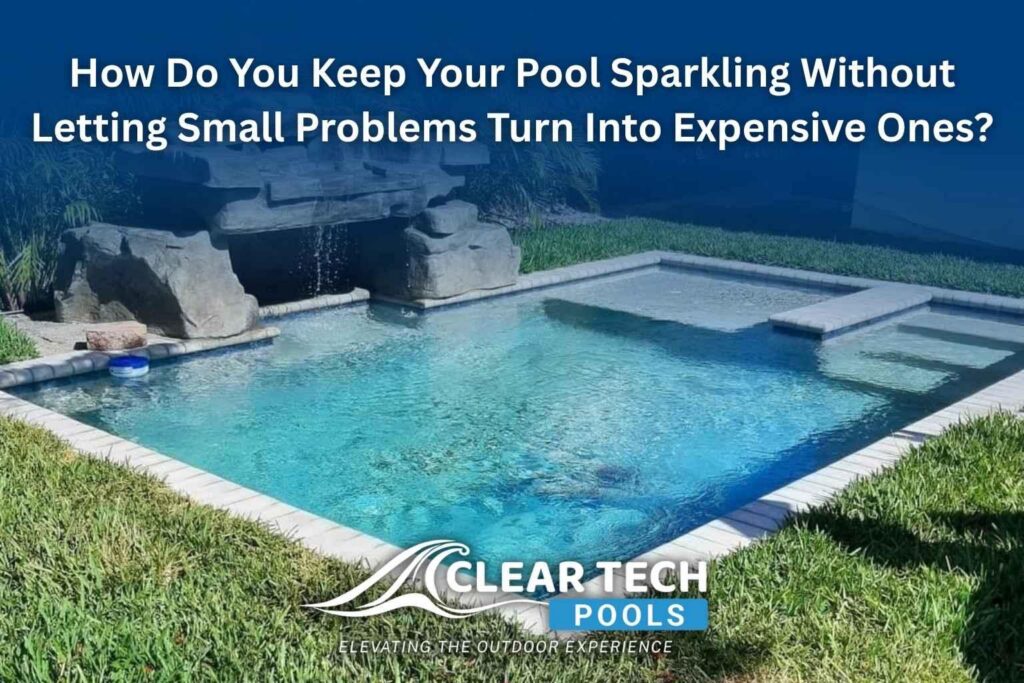
A pool stays sparkling and small problems stay small when you build three habits: test the water on a set schedule, keep water moving through a clean filter, and check your equipment for early warning signs. Florida’s year-round swim season, summer storms, and strong sun put steady demand on chlorine and equipment. Two to four hours of regular maintenance a week protects your pool and the value of your home.
I’m Ryan Lesperance, a Florida Certified Pool/Spa Contractor (license #CPC1459346) with Clear Tech Pools, and our team has handled pool service and repair for more than 30 years. Our weekly visits catch small issues, like a dropping chlorine reading or a worn pump seal, while the fix is still quick and inexpensive. Our South Pinellas Pool Supplies store in St. Petersburg also tests water for DIY pool owners.
If you are maintaining your own pool, this guide covers the filter and pump habits that keep equipment running smoothly, the early warning signs worth acting on, and how Tampa Bay storms and pollen change your routine. New owners can start with our pool care for beginners guide, and if the water has already turned green, a one-time pool cleaning brings it back to swim-ready. The guide closes with how pool maintenance costs compare with weekly service, so you can choose the option that fits your schedule and budget.
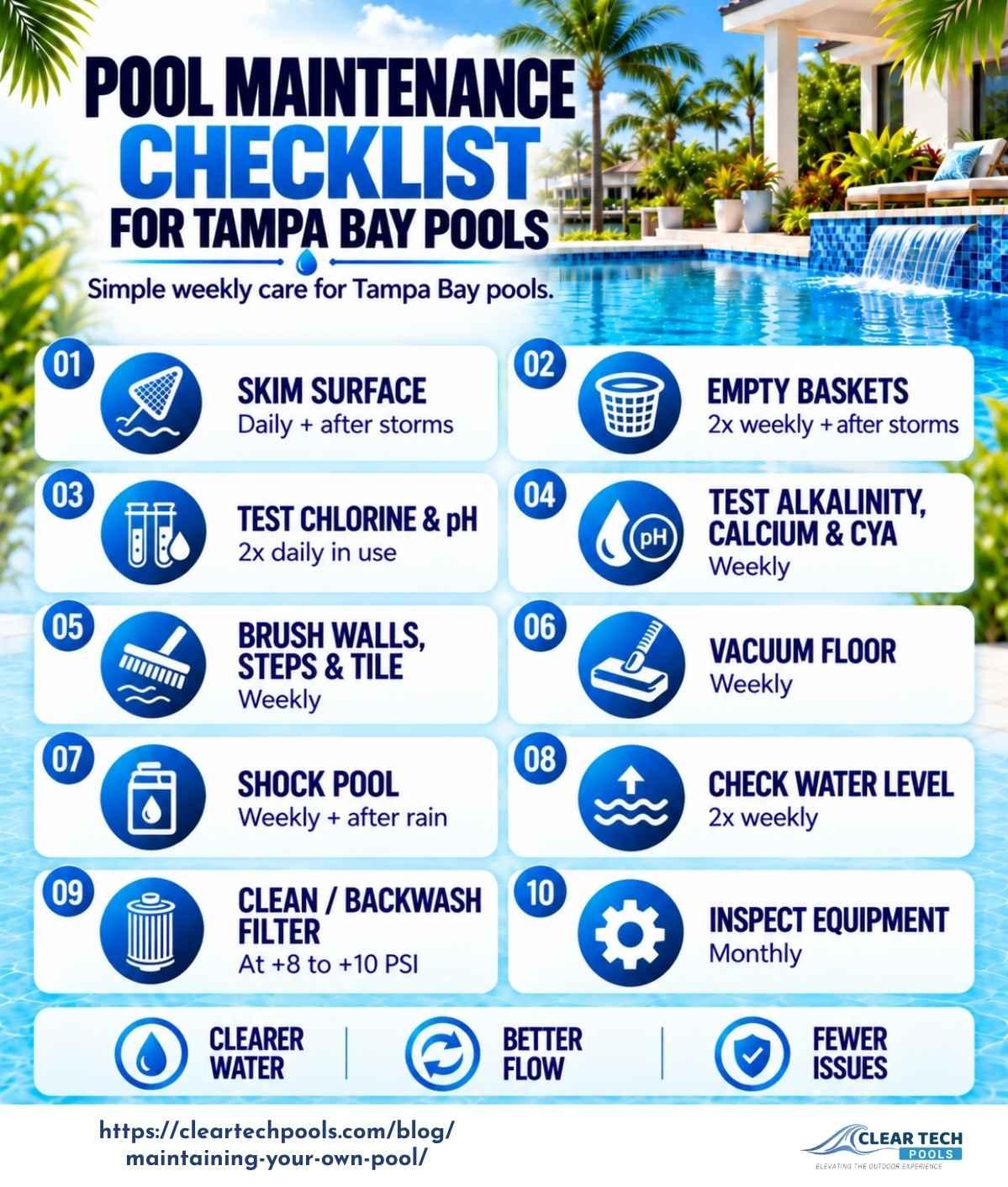
Pool Maintenance Checklist for Tampa Bay Pools
Cleaning your pool regularly on a fixed schedule saves time overall, since a missed week can lead to algae growth and clogged filters. The steps in this guide apply to in-ground pools, which typically require more upkeep and higher maintenance costs than above-ground pools because of their larger volume, plumbing, and finishes.
Task | How Often |
|---|---|
Skim the surface | Daily, and after every storm |
Empty skimmer and pump baskets | Twice a week, and after every storm |
Test free chlorine and pH | Twice a day when the pool is in use, and at least daily otherwise |
Test alkalinity, calcium hardness, and cyanuric acid | Weekly |
Brush walls, steps, and tile line | Weekly |
Vacuum the floor | Weekly |
Shock the pool | Weekly, and after heavy rain or a busy pool day |
Check the water level | Twice a week |
Clean or backwash the filter | When pressure rises 8 to 10 pounds per square inch (PSI) above your baseline |
Inspect equipment for leaks, noise, and wear | Monthly |
Empty the skimmer and pump baskets on schedule to keep water flowing and to protect the pump from straining. The weekly brushing and vacuuming session takes about 30 minutes on a typical residential pool, and an automatic or robotic cleaner can handle most of the vacuuming for you.
Brush from the shallow end toward the main drain so loosened debris moves where the pump can pull it into the filter. Vacuum afterward with slow, overlapping passes, since fast strokes stir debris back into the water. Corners, steps, and areas behind ladders are where algae usually starts, so give those spots extra attention. If trees hang over your pool, trimming the branches back will reduce debris in the skimmer and on the floor.
Water Chemistry Ranges for Florida Pools
Chemical balancing is the most important part of maintaining your own pool, and a bit of knowledge goes a long way. Balanced water lets chlorine work at full strength and protects plaster and equipment from etching and scale. Over time, it also means you add chemicals less often to keep the water in range.
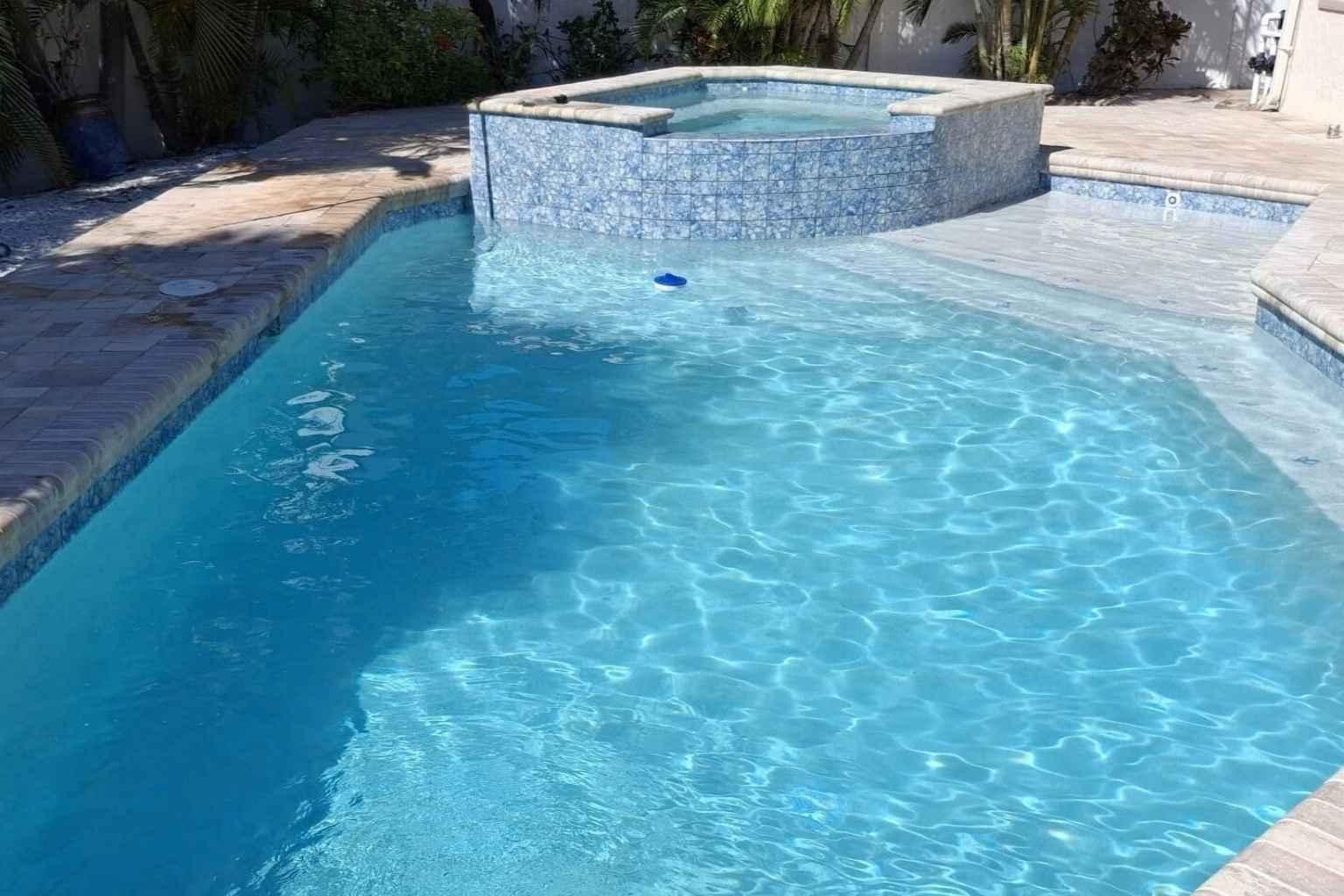
Keep a DPD liquid test kit on hand, which the Centers for Disease Control and Prevention recommends because it reads more accurately than test strips. Its home pool testing guidance sets the chlorine minimums used in this table.
Reading | Target Range | What It Does |
|---|---|---|
Free chlorine | 2 to 4 parts per million (ppm) | Kills bacteria and algae; 2 ppm is the federal minimum for pools using stabilized chlorine |
pH | 7.2 to 7.6, ideally 7.4 to 7.6 | Keeps chlorine effective and the water comfortable for swimmers |
Total alkalinity | 80 to 120 ppm | Holds pH steady |
Cyanuric acid | 30 to 50 ppm | Protects chlorine from sunlight |
Calcium hardness | 200 to 400 ppm | Protects plaster and equipment |
Adjust total alkalinity first, then pH, and then chlorine, since each reading affects the next one. Add chemicals one at a time with the pump running, follow the dosing on the product label for your pool’s size, and retest after the water has circulated for a few hours. Shock the pool after sunset so the chlorine has the full night to work.
Salt systems still require regular testing of chlorine and pH. The salt cell makes chlorine, but water balancing remains your responsibility.
A common myth holds that a strong chlorine smell means the pool has too much chlorine. In fact, the smell comes from chloramines, which form as chlorine gets used up, so a strong smell usually means the pool needs more chlorine and a shock treatment.
When a reading is hard to understand, bring a water sample to South Pinellas Pool Supplies, our retail store at 7120 Central Ave in St. Petersburg. Our staff can test it and recommend the right product.
Cyanuric Acid Buildup From Chlorine Tablets
Chlorine tablets, also called trichlor, add cyanuric acid to the water each time they dissolve. At moderate levels, cyanuric acid shields chlorine from the sun, and as the level climbs, chlorine takes longer to kill germs and algae. The result is a pool that can test within the chlorine range and still grow algae.
Test cyanuric acid once a month if you use tablets, and switch to liquid chlorine once the level nears 50 ppm, since liquid chlorine adds no cyanuric acid. A partial drain and refill is the dependable way to bring a high level down. When you drain, follow the City of St. Petersburg’s pool draining guidelines. Dechlorinate the water first, direct it over a lawn, and wait out heavy rain and drought periods.
Filter Pressure, Pump Runtime, and Water Level
Filter Pressure and Filter Types
Read the pressure gauge right after a cleaning and note that number as your baseline, then clean the filter once pressure climbs 8 to 10 PSI above it. The steps differ across the three filter types. Sand and DE filters get backwashed, and DE filters need fresh DE powder afterward in the amount listed on the filter’s label. Cartridge filters come out for a hose rinse, and our cartridge filter care guide walks through each step. Each backwash sends hundreds of gallons out of the pool, so top off the water when you finish.
Pump Runtime, Energy-Efficient Pumps, and Automation
During summer, run the pump 8 to 12 hours a day so the full volume of water passes through the filter at least once. Cooler months need less runtime.
Energy-efficient pumps are one of the most cost-effective upgrades for a pool. ENERGY STAR notes that a pool pump can be a home’s second-largest energy user. According to its pool pump guidance, a certified variable-speed pump uses about 70 percent less energy than a single-speed pump and typically pays for itself in under two years. Slower circulation also puts less strain on the filter and plumbing.
Automation systems from Pentair, Hayward, and Jandy let you schedule the pump, heaters, and lights from your phone. That cuts down on manual tasks and helps you manage energy costs.
Water Level and Skimmer Function
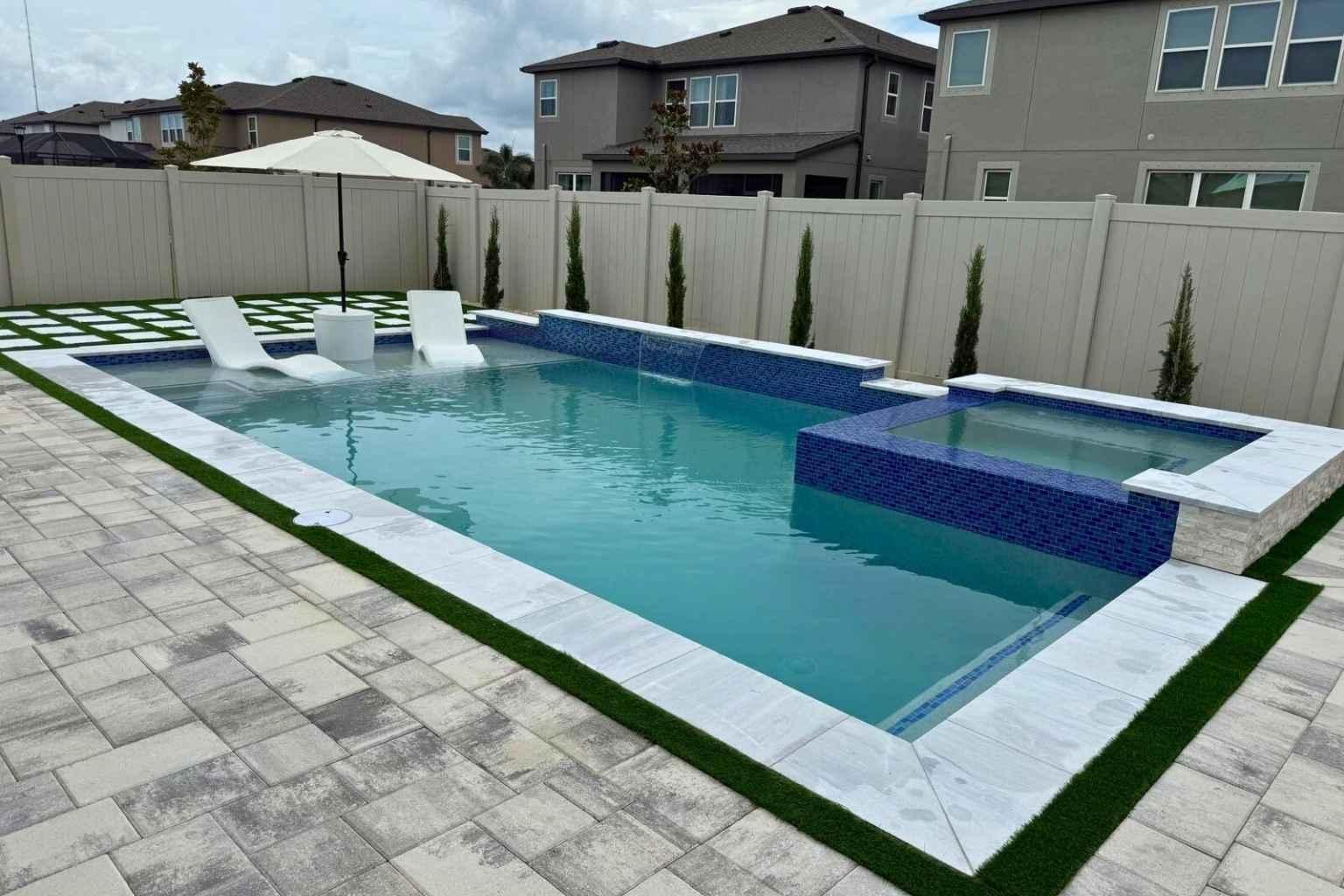
Keep the water near the middle of the skimmer opening. A low level lets the pump pull in air and lose prime, and a high level keeps the skimmer from catching floating debris.
Pool Warning Signs, Likely Causes, and First Steps
Most large pool repairs start as a small change you can spot during your weekly routine. Catching that change early keeps a small fix from turning into an expensive one. This table lists the signs our technicians check for and the first step to take for each one.
What You Notice | What It Usually Points To | First Step |
|---|---|---|
Filter pressure 8 to 10 PSI above baseline | Filter loaded with debris | Clean or backwash the filter |
Pressure stays high right after a cleaning | Worn filter media or a clog in the plumbing | Schedule a technician visit |
Green water | Algae, often with a deeper issue such as high cyanuric acid, phosphates, or poor circulation | Shock the pool and test cyanuric acid and phosphates |
Chlorine drops to zero a day after you shock | High cyanuric acid, phosphates, or early algae | Test cyanuric acid and phosphates |
Cloudy water | Low chlorine, high pH, or a dirty filter | Check those three in that order |
Pump hums, screeches, or loses prime | Low water level, a worn lid O-ring, or worn bearings | Top off the water and inspect the lid O-ring, then call if the noise continues |
Water level drops faster than evaporation | A possible plumbing or structural leak | Run a 24-hour bucket test |
White scale on tile or the salt cell | High pH or calcium hardness | Lower pH and clean the cell following the manufacturer’s directions |
The breaker or GFCI outlet for pool equipment keeps tripping | An electrical fault | Leave the power off and call a licensed professional |
For a bucket test, fill a bucket with pool water, set it on the first step so both water lines sit at the same height, and mark each line. Compare the two after 24 hours with the pump on its normal schedule. If the pool dropped noticeably more than the bucket, schedule leak detection.
When a first step leaves the problem in place, or a sign points to a leak or an electrical fault, it’s time to hire a professional. Our team handles pool equipment repair for pumps, filters, heaters, and automation.
[CLIENT TO FILL #1: quote from a Clear Tech Pools technician about the small problem they most often see grow into a larger repair, with the technician’s name and years of experience]
Storms, Pollen, and Screen Enclosures in Tampa Bay

Expect frequent afternoon thunderstorms during the summer rainy season. Heavy rain dilutes chlorine and washes phosphates, which feed algae, into the pool. After a heavy storm, empty the baskets, check the water chemistry promptly, and shock the pool that evening. Our algae prevention guide covers phosphate control in more detail.
Spring pollen settles as a yellow film that the skimmer and a fine-mesh net can remove. Many Tampa Bay pools sit inside a screen enclosure, which keeps out leaves and still lets fine dust and pollen through. Daily skimming stays part of the routine all year as a result.
During hurricane season, leave the water in the pool, switch off power to the equipment at the breaker, and bring loose deck furniture inside. If floodwater gets into the pool, hire a professional for treatment, since floodwater can carry sewage and debris. Our post-storm pool cleanup guide covers the steps for getting the pool swim-ready again.
Pool Chemical Safety and Storage
Store each chemical sealed in its original container in a dry, shaded, ventilated spot that stays below 95°F, and keep acid and chlorine apart. These steps follow the Centers for Disease Control and Prevention’s pool chemical safety recommendations. Always add chemicals to water, adding water to the bucket first. Wear gloves and safety glasses when you handle acid or chlorine, and keep the storage area locked away from children and pets.
Pool Maintenance Costs: Maintaining Your Own Pool vs. Weekly Service
Pool maintenance costs come down to a few factors, including pool size, how many swimmers use it, whether you run a salt system, and the condition of your equipment. Monthly chemical expenses stay modest when the water stays balanced. Maintaining your own pool also generally costs fewer dollars per month than professional service.
Maintaining Your Own Pool | Clear Tech Pools Weekly Service | |
|---|---|---|
Monthly cost | About [CLIENT TO FILL #2: typical monthly DIY chemical and test supply cost, based on South Pinellas Pool Supplies prices] | [CLIENT TO FILL #3: Starting at $165 per month] |
Chemicals | You buy and add them | [CLIENT TO FILL #4: which chemicals are included in the $165 weekly service] |
Your time | About 2 to 4 hours a week | None for routine care |
Equipment checks | You inspect the pump, filter, and heater | Pump, filter, heater, and automation checked every visit |
Technician | You | The same technician on the same day each week |
Records | You track your own readings | A service report after every visit |
Doing it yourself saves money on the monthly fee, and it requires a few hours of your time each week. Weekly service is the option for pool owners who would rather spend their days off relaxing, so the answer comes down to your budget and your schedule. Either way, regular maintenance is the most dependable way to keep repair costs low over the life of the pool. Automation upgrades can trim both the time and the energy expenses involved.
Weekly Pool Service From Clear Tech Pools
Clear Tech Pools offers weekly pool cleaning service for homeowners across Pinellas and Hillsborough counties. Every visit includes water testing and chemical balancing, brushing, vacuuming, basket and cartridge filter cleaning, an equipment check, and a service report. If you want to enjoy pool ownership without the weekly routine, request a quote, and our team will take it off your list. If you prefer maintaining your own pool, stop by South Pinellas Pool Supplies for chemicals, parts, and a water test from our staff.

Recent Articles

How to Remodel a Pool: What We Remove and What Stays
By Ryan Lesperance |

Benefits of a Screened Pool: What an Enclosure Does to Your Pool Water
By Ryan Lesperance |
